

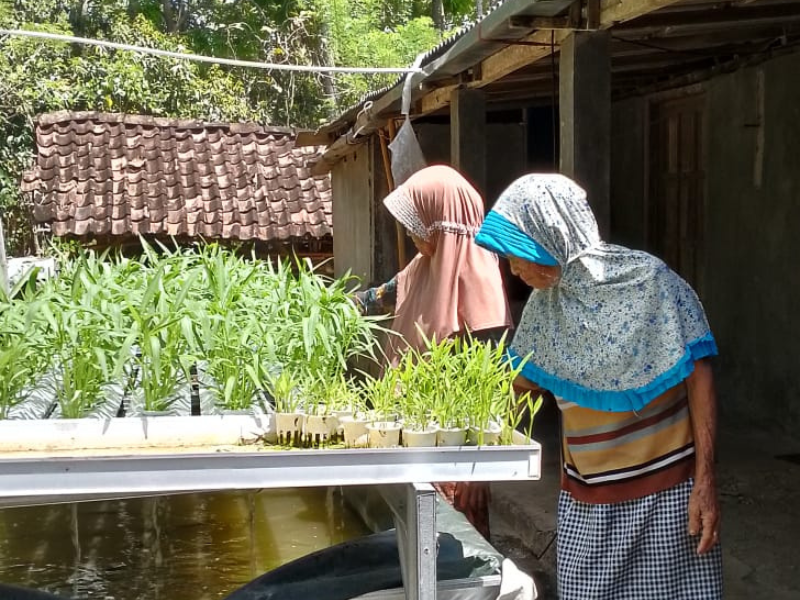
We are testing the effectiveness of the aquaponic system for the elderly in Gunungkidul, Yogyakarta, to address the needs of adequate nutrition despite a minimum income and no pension system in place.
Project Type
- Test Potential Solutions
Partners

THE PROBLEM
Around 80% of older adults in Indonesia have no pension, and 60% must continue working to support themselves. In Yogyakarta, which has one of the largest elderly populations in the country, around 60% of older adults are low-income agricultural breadwinners. Many of them must walk to distant farmland due to limited productive land near their homes. As they age, physical limitations make it increasingly difficult for them to continue working.
In addition, many older adults have limited dietary variety and insufficient protein intake, increasing their risk of sarcopenia.
THE SOLUTION
Kopernik is testing the effectiveness of an accessible aquaponics system by adapting the design to match older adults’ reach and physical limitations. This accessible system will produce vegetables and fish in one integrated setup, helping to generate additional income while improving dietary nutrition.
THE EXPECTED IMPACT
This solution aims to provide an accessible system that older adults can easily use to improve their food security by meeting their nutritional needs, while also supporting their financial well-being by reducing expenses and/or generating additional income.
THE PROJECT RESULT
The pilot project in Gunung Kidul Regency demonstrated that accessible aquaponic systems can empower elderly communities by providing a nearby, nutritious food source right in their backyards. Participants were able to independently manage daily tasks such as planting seedlings, feeding the fish, and removing surface leaves, finding these routines accessible and easy to perform.
The system produced promising results: over a 99-day cycle, the elders harvested 6.7 kg of fresh water spinach and 21.5 kg of catfish, with a high fish survival rate. Beyond the physical harvest, the project also fostered a strong sense of community, creating a new and engaging space for older adults to interact, learn, and stay active.
While the day-to-day activities were successful, the pilot also highlighted important areas for improvement. Heavy maintenance tasks—such as cleaning pumps, removing sediment, and fully draining the pond—proved too physically demanding for the elderly community and required assistance from local volunteers and family members. Economically, the first cycle resulted in a slight financial loss, as operational costs slightly exceeded the value of the produce.
However, these insights provide a clear roadmap for the next phase. By implementing routine water maintenance and a more consistent and precise feeding schedule, the project aims to increase fish yields in future cycles, helping ensure the system becomes both self-sustaining and financially beneficial for the community.
This project is implemented by Yayasan Kopernik on behalf of our partner who provided grant funding for this project.
