

The Indonesian archipelago stretches along the equator between the Pacific Ocean and the Indian Ocean, forming a chain of more than 17,000 islands. Among the largest are Sumatra, Java, Borneo, Sulawesi, and Papua, home to hundreds of thousands of plant and animal species, making Indonesia one of the countries with world's richest biodiversity on Earth.
Over the past two decades, Indonesia lost 32 million hectares of forest (about 20% of its forest area in 2000), resulting in 23 billion tons of CO₂ emissions (Global Forest Watch, 2026). Most primary forest loss occurred near existing timber, wood fiber, and palm oil plantations, small-scale agricultural areas, mining zones, or as a result of logging expansion (World Resources Institute, 2025). These massive deforestation activities put Indonesia as a leading global land-use carbon emitter and pose significant risks to its globally rich biodiversity (Parker et al., 2024).
In Papua, for instance, forests alone cover more than half of the land area, serving as the sources of livelihood for millions of indigenous peoples. For generations, communities, especially women, have relied on forests for food, medicine, fuel, and income. Today, however, Papuan women and their families are facing imminent and continuous threats. Of the 20 million hectares of productive forest in Papua, 17 million hectares are used as concession areas where massive land conversion for industrials and rapid expansion of palm oil plantations have taken place.As a result, the region has become heavily reliant on extractive industries such as mining and quarrying, which contribute significantly to its gross domestic regional product (BPS Papua, 2024).
Furthermore, the extractive sector employs only around 79,000 indigenous Papuans, or 27% from the total workforce of 290,000. This has contributed to persistent poverty and low human development indices, especially in regions such as Papua Pegunungan, which is far below the national average (Indeks Pembangunan Manusia, 2023). The environmental costs caused by extractive industries are severe. In 2024 alone, nearly 35,000 hectares of forest were lost (Global Forest Watch, 2024). Over the past two decades, this has contributed to 480 million tons of CO₂ emissions while massive tailings discharge has devastated ecosystems (WALHI and Mongabay Indonesia, 2023).
As extractive activities expand, Indigenous Papuans have paid the highest price for the loss of their forests. Many families face displacement, loss of livelihoods, and exclusion from decision-making processes that directly affect their territories. Land conflicts are also rampant, with 154 nationally reported cases highlighting systemic disregard for customary rights (Konsorsium Pembaruan Agraria, 2024). These tensions have contributed to rising social instability. Frustration over land dispossession and unequal development has fueled resistance movements and deepened mistrust between communities, corporations, and the state. Rather than bringing prosperity, the extractive model has, in many cases, intensified divisions and left indigenous communities navigating both economic and social marginalisation.
Restorative economy offers renewed hope for the Papuans to restore what they have lost by shifting focus from extraction to regeneration. A recent study on bio-restorative economy in Tanah Papua conducted by Kopernik in collaboration with EcoNusa shows that existing restorative economic activities already generate around IDR 1.4 trillion annually, engaging more than 10,000 people, 90% of whom are Indigenous Papuans, and help protect 1.1 million hectares of land. With supportive policies and investment, this approach could scale significantly. The study estimates a potential annual value of IDR 65–130 trillion, primarily from agriculture and fisheries, creating opportunities for over 520,000 indigenous people while protecting up to 9.2 million hectares of forests.
These findings point to a viable alternative development pathway in Papua - one that strengthens livelihoods while sustaining forests and Indigenous stewardship.
The Role of Women in Advancing Restorative Economy
To realise the potential of restorative economy, Kopernik is implementing a three-year social forestry program that integrates economic empowerment with environmental stewardship. The program engages women’s groups in forest management, biodiversity protection, and sustainable enterprise development. Through trainings, market access support, infrastructure provision, and mentorship programs, women are empowered to become agents of change, stewards of forest ecosystems and entrepreneurs/producers capable of transforming forest commodities into value-added products through sustainable production practices.
This program is also part of Kopernik’s broader commitment to advancing a restorative economy, which links forest protection with fairer and more sustainable livelihoods. Building on this foundation, Kopernik is putting that thinking into practice through a program that focuses on forests and women across different parts of Indonesia, including Papua, where deforestation threats are among the most severe and the need for community-led, forest-based economic pathways are urgently needed.
The program spans four locations across Indonesia, engaging closely with local organisations and social enterprises as Kopernik’s implementation partners.
In eastern Indonesia, Kopernik supports women in Soa Village, Merauke, who process wild-grown cashews from surrounding forests into healthy snack products. Assisted by local CSO Yayasan Dahetok Milah, Kopernik has supported the construction of a production house, facilitated product permit registration, and provided production equipment. The production house enables women to apply good manufacturing practices, improve quality control, and strengthen their competitiveness.
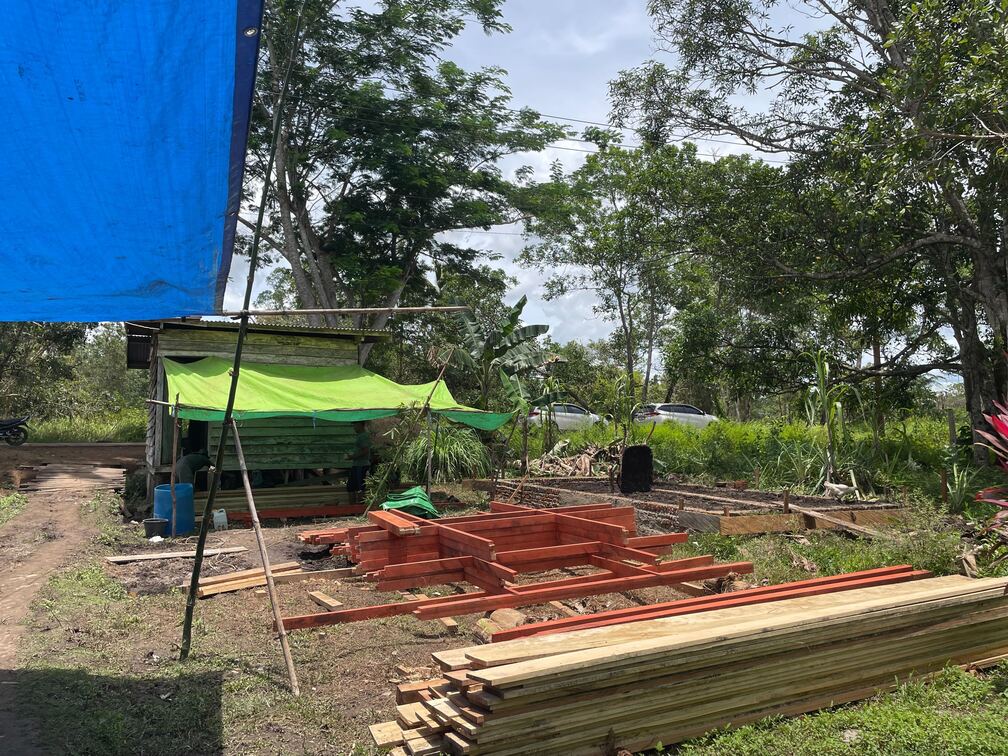
The ongoing construction of production house for the women communities in Merauke
In West Papua, women living in Saupapir Village and Fam Island in the Raja Ampat area are developing community-based enterprises rooted in their unique coastal and forest landscape. Together with Raja Ampat Naturale, a local social enterprise aims at empowering women in Raja Ampat, Kopernik provides training to produce personal care products such as body lotion, soap bar, shampoo and mosquito repellent, using coconut oil processed and sourced directly from coconuts grown on their indigenous lands. With additional natural ingredients such as citronella and lemongrass cultivated locally, women are able to create low-cost, environmentally friendly products while preserving their island forests.
As Mama Ros, head of one of the women’s groups, shared during a baseline assessment:
“I am grateful for the opportunity to make body lotion for Raja Ampat Naturale. Beyond providing an income, it has helped me feel more confident because I now know I can create products. Through the training, I also make my own products and try to sell them. I want to help other women so they can also grow their skills and improve their economy.”
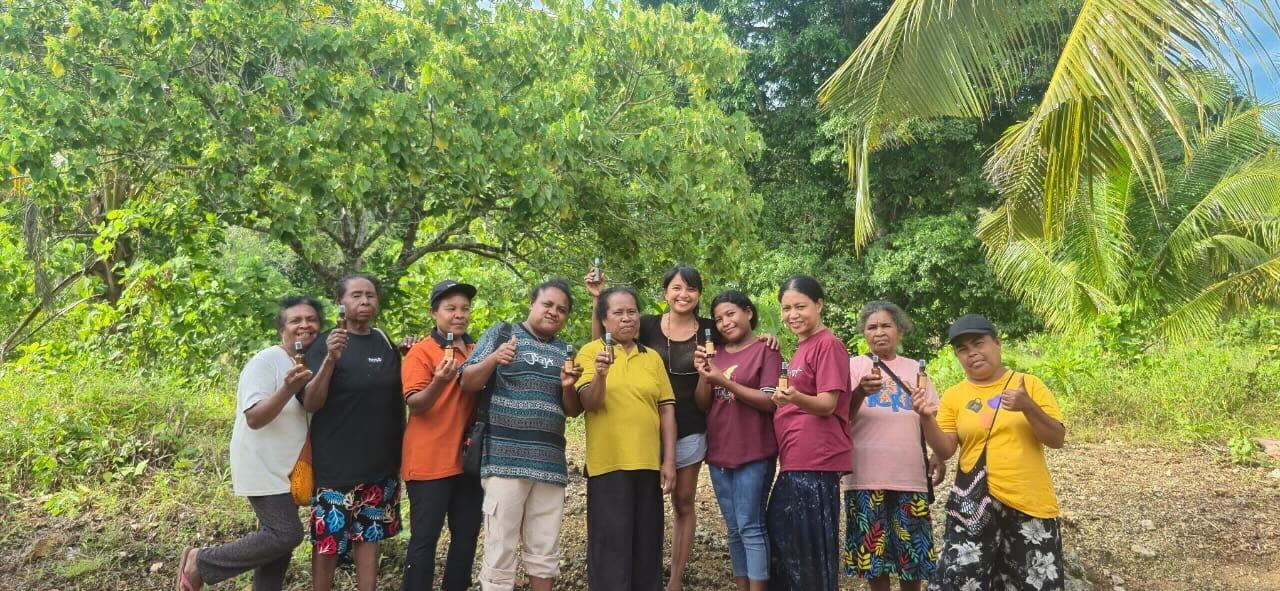
Women in Pulau Fam and Saupapir
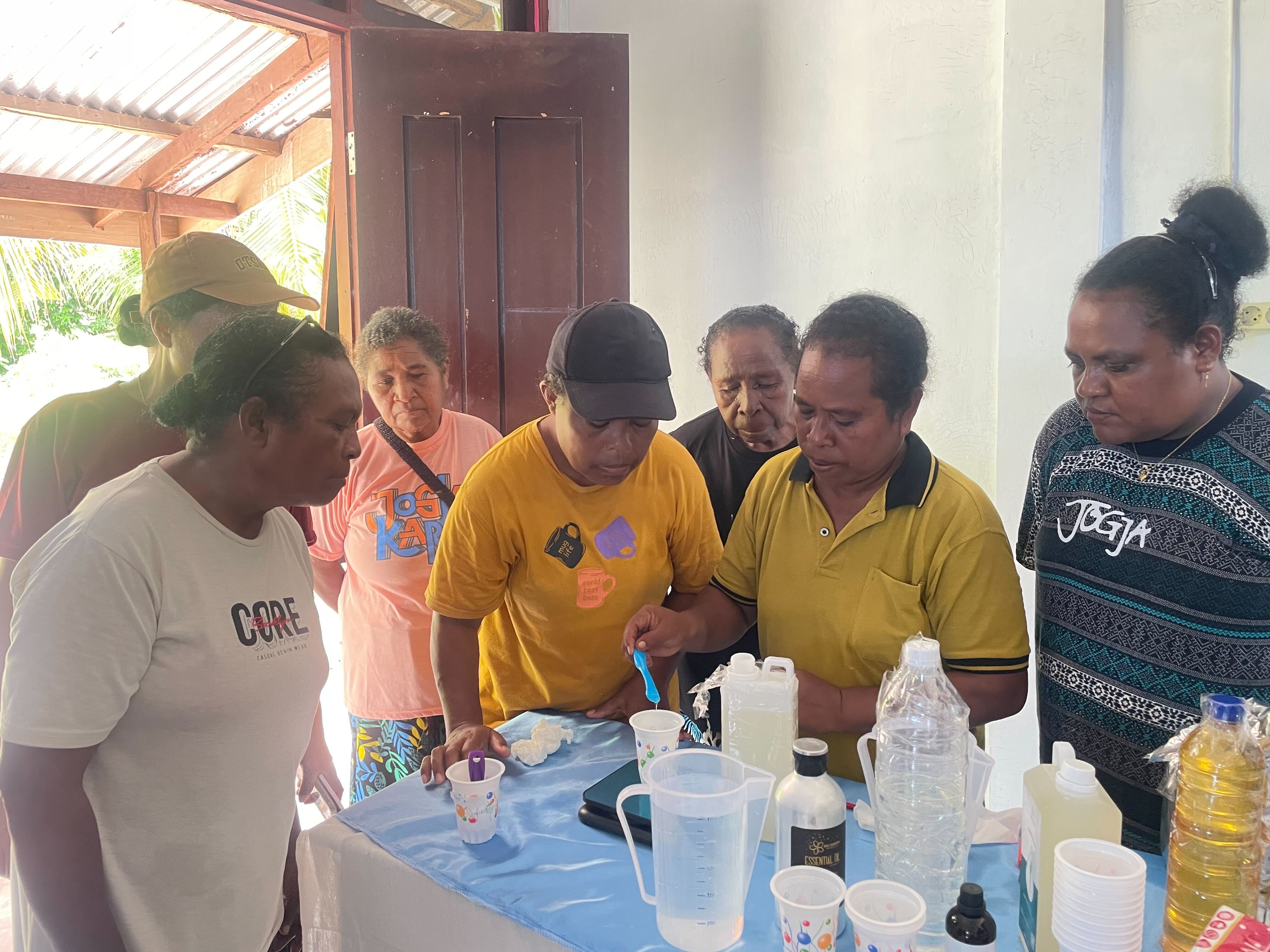
Women in Pulau Fam and Saupapir conducted shampoo-making training
In Central Java, Kopernik supports women bamboo weavers in Magelang who have been significantly affected by climate change. They struggle to dry bamboo iratan (strips) during prolonged rains and resulting mold due to high humidity. In partnership with local social enterprise KRAOSAN, the program provides training on improved storage techniques, weaving skills, entrepreneurship, and lean experimentation to address mold-related challenges. Through focus group discussions, the women expressed strong aspirations to expand their market reach while preserving traditional craftsmanship. Their eagerness to learn new weaving techniques and patterns shows that, although women often carry substantial domestic responsibilities, access to learning opportunities can be deeply empowering. It can strengthen their confidence, creativity, and sense of possibility.
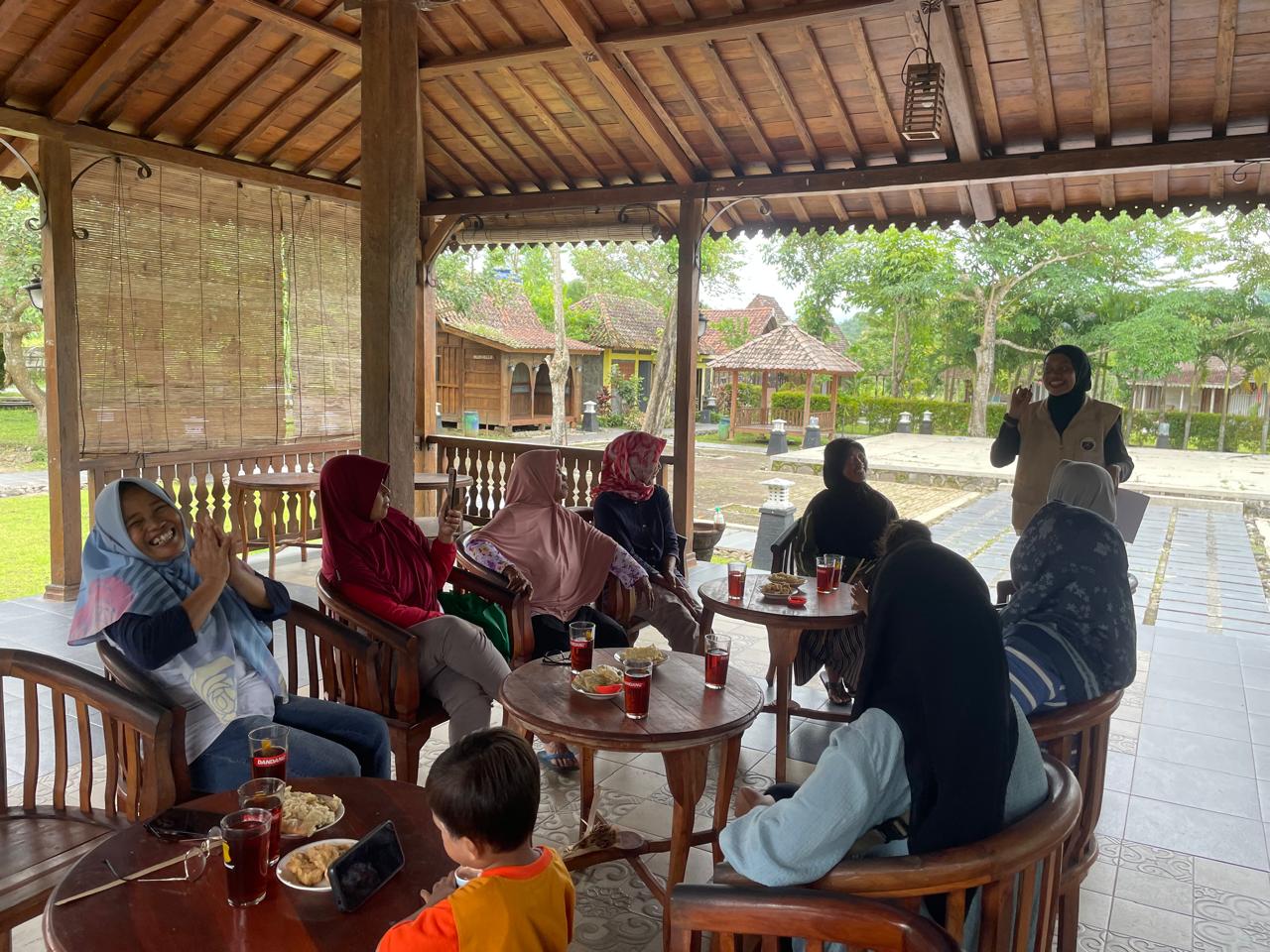
FGD with women bamboo weavers in Magelang
Finally, in Bali, Kopernik works with women in Karangasem who process palmyra (lontar) sugar harvested from forests behind their homes. While men typically collect the sap, women lead the labor-intensive post-harvest process, from fermenting and cooking the sap to producing block and granulated sugar, conducting quality control, and managing sales. In collaboration with Bali-based social enterprise Tarunira, Kopernik supports communal kitchen facilities, improved production equipment, and value-added product development to enhance women’s productivity and agency.
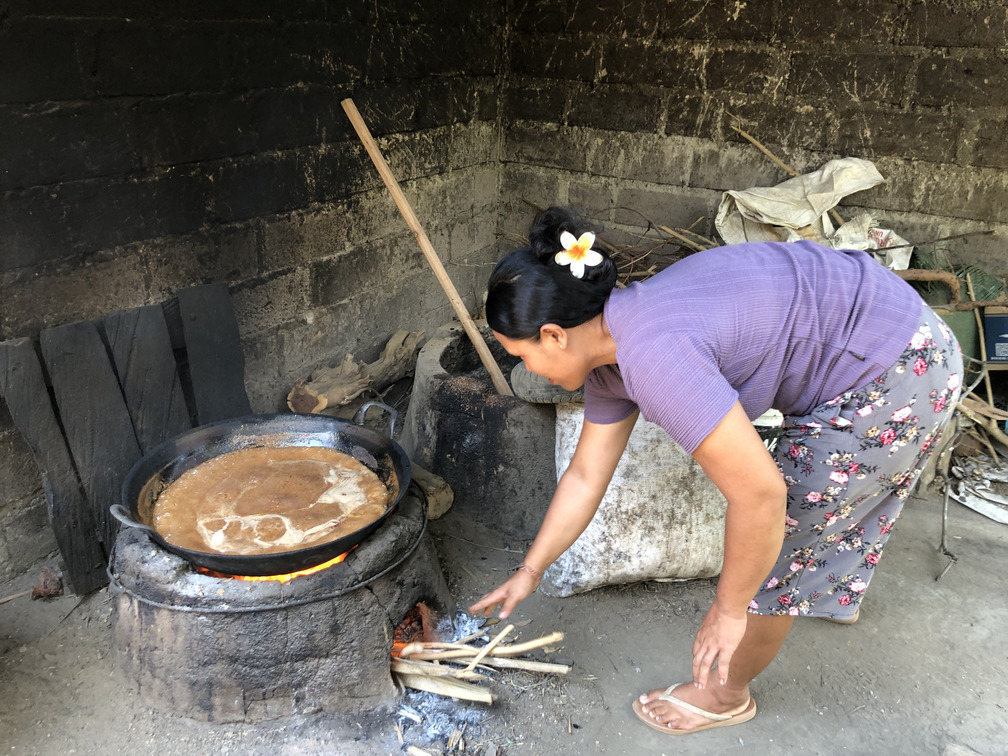
Mbok Wayan processed the nyra into sugar
Leadership That Endures
Recognising that women’s leadership is central to forest protection and conservation, the program also invests in leadership training and good agricultural practices. By strengthening women’s confidence in learning, leading, and decision-making, the initiative aims to increase their participation in forest restoration and regenerative agroforestry efforts.
This social forestry program, implemented through collaboration between Kopernik and implementation partners whose presence is critical within these communities, demonstrates that building a restorative economy requires more than funding alone. It requires capacity building, partnerships, and patient capital as an investment in community leadership. When women are empowered as stewards and entrepreneurs, forest protection becomes not only an environmental imperative, but a pathway toward a resilient and inclusive society with an economy that is just, regenerative, and rooted in the well-being of its people and nature.
