

This year marks a special milestone for us as the Ibu Inspirasi program expanded to SoE, South Central Timor Regency, East Nusa Tenggara Province. With renewed spirit, we collaborated with Women’s Earth Alliance (WEA) and ten women weavers in SoE to preserve Timor’s rich weaving heritage while opening pathways toward more environmentally friendly and economically resilient livelihoods.
For the people of Timor, weaving is a story, an identity, and a legacy passed down through generations. Amid modernization and economic challenges, sustaining this tradition requires adaptation. This program became an opportunity for the weavers to safeguard their ancestral heritage while exploring new approaches to make their craft more relevant and sustainable.
Timorese women weavers have long been familiar with natural dyes, but most had never practiced using them. Traditionally, they focused on producing shawls, blankets, and sarongs, which process starts from spinning the yarn, arranging motifs, to weaving. Natural yarn dyeing therefore introduced a new stage in their weaving practice, opening up a different and meaningful experience.
Together with the Kopernik team, ten weavers—Mama Margarita, Mama Yosalina, Mama Yustina, Mama Anita, Mama Antonia, Mama Maria, Mama Nelci, Mama Nofri, Kakak Mesry, and Kakak Wasti—took their first steps in learning and practicing natural dyeing. This knowledge was shared directly by a senior weaver fondly known as Nenek Marsalina Leokuna.
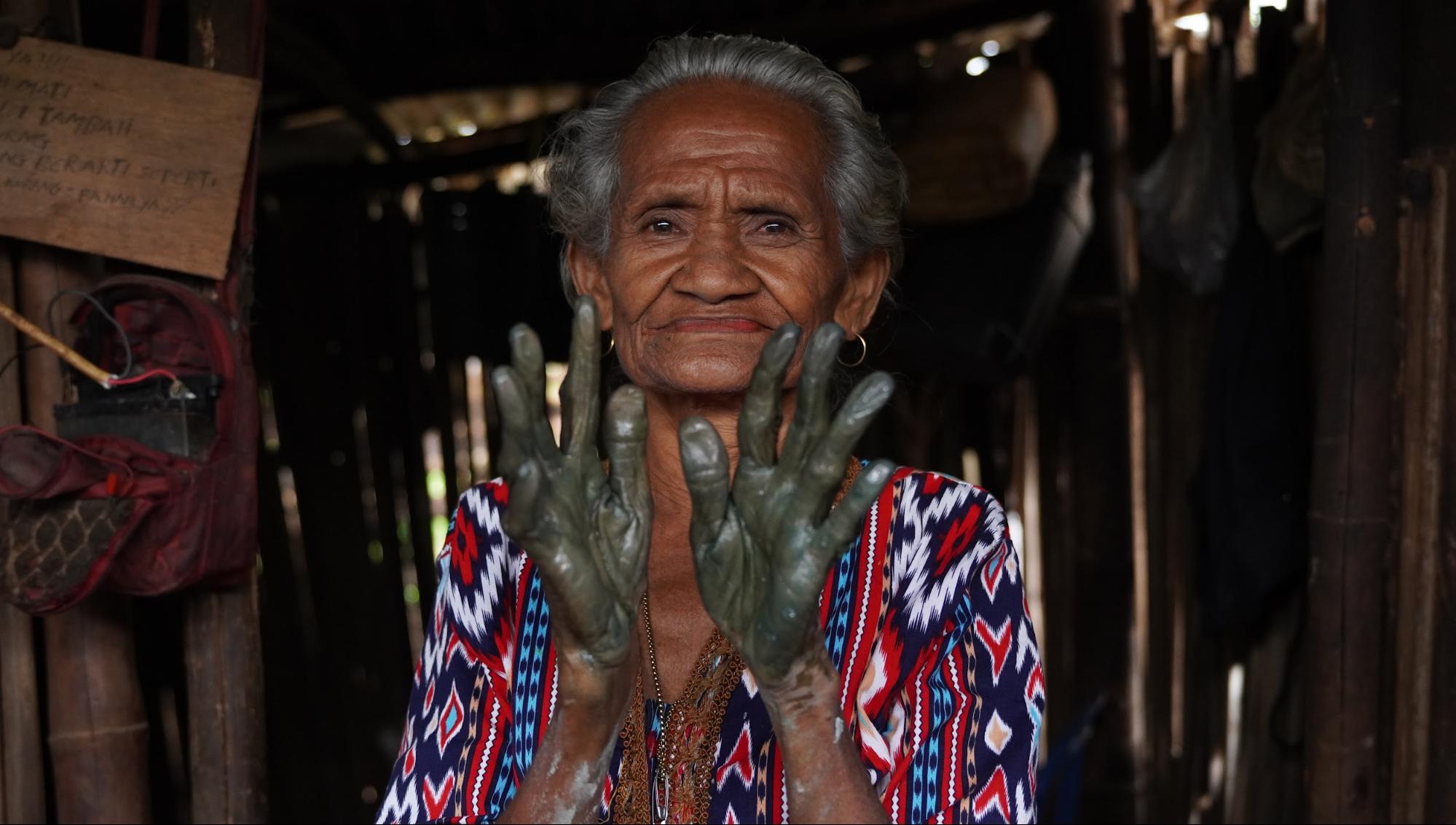 Nenek Marsalina (78) shares her experience with the Lun Tuis weaving group, teaching them how to dye yarn using natural materials.
Nenek Marsalina introduced natural dyeing techniques using materials such as tarum or taum leaves—local plants that produce shades ranging from indigo and bluish-gray to deep black. She also demonstrated how turmeric mixed with mango tree bark can create a bright yellow color. While the process appears simple, it requires undivided attention. The women followed every step, from harvesting leaves in the garden, crushing them, boiling them with lime, to soaking the yarn until the color was fully absorbed into the fibers.
Each stage had to be done carefully: the color needed to be even, the yarn properly prepared, and the water temperature just right. For the weavers, this was a valuable experience, reconnecting with ancestral knowledge while opening new possibilities for independence in their weaving practice.
“Before, we only wove using store-bought yarn. Now we know that these colors can come from our own gardens,” said Mama Margarita, the group leader.
The learning journey continued with Kakak Merry Banunaek, a student from the SoE Institute of Education, who was involved through the Ministry of Education and Culture’s PPK Ormawa program in collaboration with the South Central Timor Office of Cooperatives and Trade. From Kak Merry, the weavers learned about the importance of boiling, dyeing, and color fixation using alum, quicklime, and iron solution to make the colors stronger and longer-lasting.
“It takes a lot of practice to understand what colors can be produced from local materials, especially brighter shades,” said Kakak Merry.
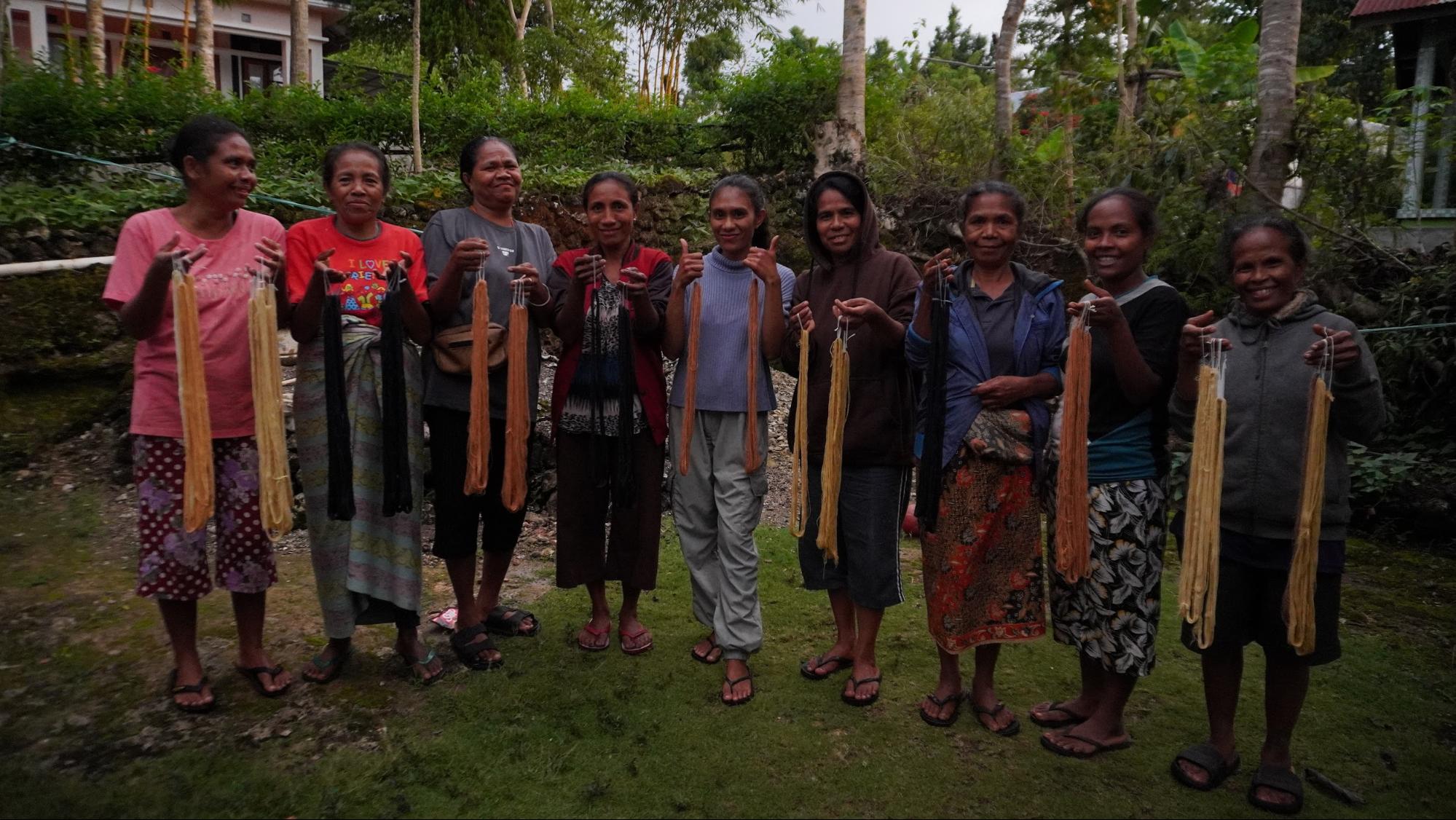 The Lun Tuis weaving group and Kak Merry pose together after dyeing yarn with natural materials such as guava leaves, avocado leaves, mahogany bark, and turmeric.
The journey then continued to Mollo for a learning session with Mama Metty. There, the weavers were introduced to additional natural dye sources, including mahogany bark, turmeric, Dayak onion, and cassava leaves. They also learned that natural dyeing is highly dependent on sunlight. To achieve strong and lasting colors, yarn must be dried directly under the sun.
This dependence on sunlight presents its own challenges, as weather conditions in SoE and surrounding areas are often unpredictable. At times, what should be the dry season still brings high humidity and unexpected rain, a phenomenon known locally as the “wet dry season.” In these conditions, the weavers learned to adjust their timing and work with nature, recognizing that in natural dyeing, nature is both teacher and partner.
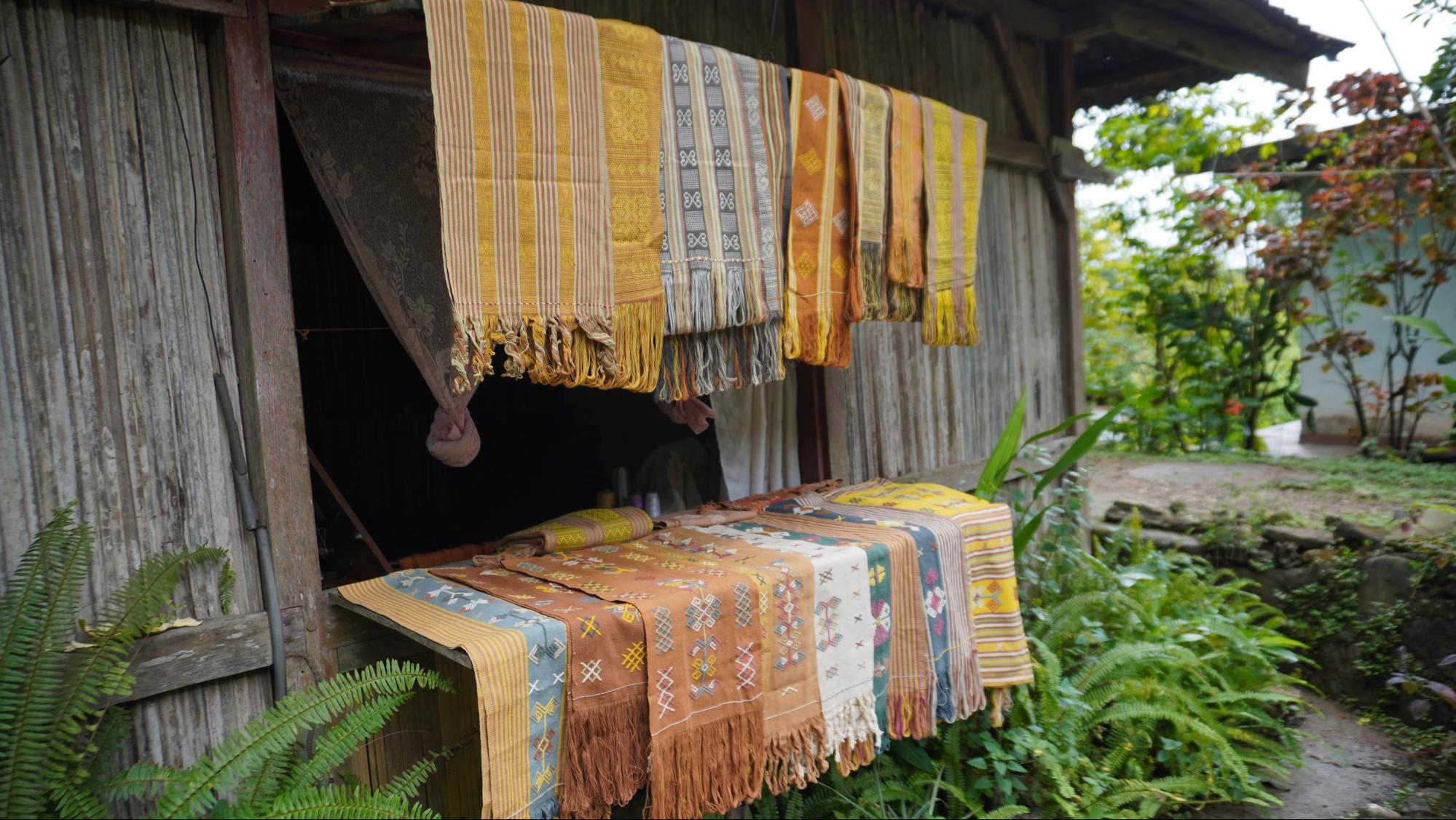 Naturally dyed woven fabric featuring traditional motifs from Nunkolo Village, South Amanuban District, South Central Timor Regency.
By combining traditional techniques, local resources, and dyeing innovations, weaving communities have the opportunity to increase product competitiveness, reduce reliance on synthetic dyes, and build local business models that connect farmers, natural dye processors, and weavers within an integrated value chain.
Through natural dyeing practices, these women weavers are weaving a more colorful future, visually, economically, and ecologically toward a weaving movement that is more empowered, rooted, and sustainable. For them, weaving is a way to care for culture and nature side by side.
